Curriculum

Curriculum

    • English Language Arts Curriculum

      • Kindergarten

        • Heggerty Phonemic Awareness Kindergarten Curriculum; Literacy Resources, LLC

        • Core Knowledge Language Arts 2nd Edition; Amplify

      • 1st Grade

        • Heggerty Phonemic Awareness Primary Curriculum; Literacy Resources, LLC

        • Core Knowledge Language Arts 2nd Edition; Amplify

        •  
      • 2nd Grade

        • Core Knowledge Language Arts 2nd Edition; Amplify

      • 3rd Grade

        • Core Knowledge Language Arts 2nd Edition; Amplify

      • 4th Grade

        • Core Knowledge Language Arts 2nd Edition; Amplify

      • 5th Grade

        • Core Knowledge Language Arts 2nd Edition; Amplify

    • Remedial Programs

      • Heggerty Phonemic Awareness; Literacy Resources, LLC

      • Phonics First Orton-Gillingham; Branspring Store

    • Contact

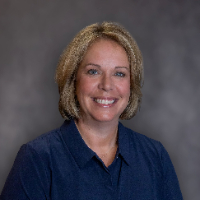
    A woman with blonde hair smiles at the camera, wearing a blue shirt.

    Michelle Wagner

    Preschool Director, Director of K-5 Curriculum

    DeKalb County Central United Schools

    miwagner@dekalbcentral.net

    • English Language Arts Curriculum
      • 6th-8th Grade
        • CommonLit 360 Reading and Writing Curriculum
      • Remedial Programs
        • Orton-Gillingham
        • Quill Grammar and Writing Instruction
      • Contact
    • English Language Arts Curriculum
      • 9th Grade
        • Pearson Common Core Literature; Pearson Education, Inc.
        • CommonLit Reading and Writing Curriculum
        • Membean
        • Khan Academy
      • 10th Grade
        • Pearson Common Core Literature; Pearson Education, Inc.
        • CommonLit Reading and Writing Curriculum
        • Membean
        • Khan Academy
        • Actively Learn
        • Writing Coach; Pearson Education, Inc.
        • Purdue Owl
      • 11th Grade
        • CommonLit Reading and Writing Curriculum
        • Membean
        • Khan Academy
        • Purdue Owl
        • AP Classroom
      • 12th Grade
        • Membean
        • Khan Academy
        • Purdue Owl
        • AP Classroom
        • Everyone’s An Author; W.W. Norton and Company
        • Purdue Fort Wayne Writing Handbook
    • Remedial Programs
      • IXL English Language Arts
    • Contact
      • Rief Gilg
      • Associate Principal
      • rgilg@dekalbcentral.net
  • DeKalb Central Dyslexia Reporting Data

    2025-2026


    Number of students administered the dyslexia screening


    745


    Number of students determined to be “at risk” or “at some risk”


    39


    Number of students determined to be “at risk” or “at some risk” and received intervention support


    39


    Number of students diagnosed with dyslexia


    10


    Intervention program used


    Orton-Gillingham, Heggerty Phonemic Awareness, UFLI Foundations

  •  

    High Ability Program


    High Ability Plan

    Description

    District Mission Statement for the High Ability Program

    DeKalb County Central United School District's mission is to offer educational opportunities which will engage, challenge, and support high ability learners to reach their full intellectual, social and emotional, and creative potential.

    District Definition of High Ability Students

    The Indiana Code defines a student with high abilities as one whom

    1. Performs at or shows the potential for performing at, an outstanding level of accomplishment in at least one domain when compared to other students of the same age, experience, or environment; and
    2. Is characterized by exceptional gifts, talents, motivation, or interests 

    District Services 

    Elementary Schools

    • Curriculum is differentiated for acceleration and enrichment.  Meeting individual student needs is planned and intentional.
    • Identified students may be placed in a cluster group for targeted instruction.
    • Acceleration by grade level (early entrance to kindergarten and/or grade skipping) will be considered on an individual basis.
    • Academic clubs and competitions are available.
     

    Middle School

    • Accelerated Math Pathways are available.
    • English Honors classes are available.
    • High school credit courses are available.
    • Academic clubs and competitions are available.
     

    High School

    • Honors, dual credit, and advanced placement courses are available.
    • Internships and mentorships are available.
    • Academic clubs and competitions are available.

    Norm-Referenced Ability Measure

    K-8th Grade:

    Cognitive Abilities Test (CogAT)

    Norm-References Achievement Measure

    K-8th Grade:

    IREADY, ILEARN Checkpoints

    Qualitative Indicators

    K-8th Grade:

    Scales for Identifying Gifted Students (SIGS)

    Selection Procedures

    DeKalb Central United Schools follows the Indiana definition of a high ability student as one who “performs at, or shows the potential for  performing at an outstanding level of accomplishment in at least one domain when compared to others of the same age,  experience, or environment.” Students can be identified for the high ability program through  one of the following six pathways: 

    For High Ability Identification in Math: 

    Through Performance: An outstanding score (96th percentile or higher) on a norm-referenced measure of  math achievement 

    Through Potential: An outstanding score (96th percentile  or higher) on a norm-referenced measure of quantitative  reasoning or a composite measure of  

    quantitative/nonverbal reasoning 

    Through Additional Data: When a child’s score on either  the norm reference measure of achievement or reasoning falls just below the cutoff, additional data in  the form of teacher rating scales or classroom work  samples will be reviewed to determine appropriate  placement.


    For High Ability Identification in Language Arts: 

    Through Performance: An outstanding score (96th percentile or higher) on a norm-referenced measure of  reading and language achievement 

    Through Potential: An outstanding score (96th percentile  or higher) on a norm-referenced measure of verbal  reasoning 

    Through Additional Data: When a child’s score on either  the norm referenced measure of achievement or reasoning falls just below the cutoff, additional data in  the form of teacher rating scales or classroom work  samples will be reviewed to determine appropriate  placement. The district recognizes that cognitive growth is not always  consistent. To ensure all students are receiving appropriate  curriculum and instruction, they will be systematically  evaluated in Kindergarten, 2nd, 5th, and 8th grade for  instructional placement the following school year.

    Appeals Process

    Upon completion of the identification process for high ability services, a parent, teacher, or student may contact the principal, instructional coach, or high ability liaison about placement requirements and the appeal process.

    • The parent or teacher reviews the presentation on DeKalb Central County United School Districts Qualifiers for Services and Characteristics of Gifted Learners.
    • The parent or teacher must complete the High Ability Petition.
    • The person making the appeal should prepare a portfolio including other assessment information, exceptional student products, and at least two (2) letters of recommendation to the district's high ability coordinator or designee.
    • The district high ability coordinator will facilitate an appeal committee meeting to review the file.
    • The review committee will respond in writing within no more than thirty (30) days from the date the appeal was received.

    Exit Process

    DeKalb Central’s exit procedure reflects the best interests of our students who participate in the high ability program.  If a student is no longer benefiting from these high ability services, based on a recommendation from the teacher, high ability liaison or parent, we will follow these procedures:

    • An initial conference will be scheduled to discuss the student’s strengths and weaknesses within the high ability program.  Present at the conference will be all stakeholders such as the parents or guardians, teacher (s), student (if applicable), High Ability Liaison, Principal, Instructional Coach and High Ability Coordinator (if applicable).
    • Determined at this initial conference are next steps for the student and their learning.  We will determine specific interventions to be put in place to assist the child.  We will determine who will deliver these interventions and the time period for the interventions.  We will determine when the interventions will begin as well as determine the data that will be collected to show us that we have been successful or if further steps are needed.
    • A date will be set for our next conference after we have determined how long the interventions must be in place to determine whether they have been effective or not.  Teacher, interventionist, Instructional Coach and or High Ability Liaison will collect data and evidence to share that support student’s learning. 
    • Next steps will then be determined as to whether the student (based on data, evidence and a combined, collaborative decision), will remain in the High Ability program or will exit the program.
    • If the student remains in the program, interventions and next steps will continue to aid the student in their learning.
    • If the student exits the program, the high ability designation will be removed from the child’s STN. 


    A woman with shoulder-length brown hair and a warm smile looks directly at the camera.

    Keeley Glasper

    Coordinator & James R. Watson Liaison

    Kelly Haber

    Kelly Haber

    khaber@dekalbcentral.net

    McKenney-Harrison Elementary Liaison

    Colby Cain

    Colby Cain

    ccain@dekalbcentral.net

    Country Meadow Elementary Liaison

    Jamie Grandstaff

    Jamie Shephard

    jshephard@dekalbcentral.net

    Waterloo Elementary Liaison

    A headshot of a smiling young man with light brown hair and blue eyes, wearing a black t-shirt.

    Logan Williams


    DeKalb Middle School Liaison


  • Human Sexuality Instruction / SEA 442

    Instructional Material List

    5th Grade at all four Elementary Schools:


    DeKalb Middle School


    6th Grade Health    


    Decisions for Health:  Student Edition Level Green Holt, Rinehart & Winston, 2009


    Instruction explores puberty’s physical, social, and emotional changes through discussions and activities, with an emphasis on respect and healthy choices.


    Supplemental Materials:        

    6th Grade Folder


    7th Grade Health      

    Decisions for Health:  Student Edition Level Red Holt, Rinehart & Winston, 2009


    Instruction includes basic male and female anatomy, the study of reproduction, pregnancy, birth, and abstinence.


    Supplemental Materials:        

    Reproductive Systems

    Male Reproductive System (Questions)

    Female Reproductive System (Questions)

    Pregnancy and Birth (Questions)


    DeKalb High School


    Health Instruction and Materials

    Slide 1: Title

    HS Health: Sexuality, Consent, and Reproduction

    Standards: HS.1.8, HS.4.5, HS.5.1, HS.5.3


    Slide 2: Human Sexuality (HS.1.8)

    Learning Outcome: Define human sexuality across physical, emotional, social, and cultural dimensions.

    Definition: Human sexuality is how people experience and express themselves as sexual beings, shaped by biology, emotions, relationships, values, and society.

    Video: What Is Sexuality?

    Reflection Prompt: "What does sexuality mean to you in your own words?"


    Slide 3: Consent (HS.4.5)

    Learning Outcome: Explain consent as a clear, voluntary, informed "yes" that can be withdrawn at any time.

    Definition: Consent means everyone involved freely agrees to an activity, fully understands it, and can change their mind anytime.

    Video: Boundaries and Consent for Teens

    Reflection Prompt: "Give an example of asking for or respecting someone's boundaries."


    Slide 4: Abstinence (HS.5.1)

    Learning Outcome: Describe abstinence as a personal choice to refrain from sexual activity and recognize it as the only 100% effective way to prevent pregnancy and STIs.

    Definition: Abstinence is choosing not to have sexual activity, often for personal, emotional, health, or religious reasons.

    Reflection Prompt: "Why might someone choose abstinence?"


    Slide 5: Contraception (HS.5.3)

    Learning Outcome: Identify contraceptive methods and explain how they prevent pregnancy and may reduce STI risk.

    Definition: Contraception includes methods like condoms, pills, IUDs, and implants that help prevent pregnancy and sometimes protect against STIs.

    Video: Methods of Contraception Made Easy

    Reflection Prompt: "Name two contraception methods and describe how they work."


    Slide 6: Reproduction (HS.5.1)

    Learning Outcome: Explain human reproduction as the process in which a sperm fertilizes an egg, leading to pregnancy.

    Definition: Reproduction is how new human life begins through fertilization, when sperm joins with an egg.

    Video: Fertilization

    Ultrasound Video: Ultrasound Video

    Reflection Prompt: "What is the first step in human reproduction?"


    Slide 7: Exit Ticket / Reflection

    • Why is understanding consent important in every type of relationship?

    • How does learning about sexuality, abstinence, contraception, and reproduction help you make healthy choices?


    Bibliography / Resources and Standards

    Indiana Department of Education. Indiana Academic Standards for Health and Wellness (2023). Indiana Academic Standards for Health and Wellness. Standards included: HS.1.8, HS.4.5, HS.5.1, HS.5.3.

    What Is Sexuality? [Video]. YouTube. What Is Sexuality?

    Boundaries and Consent for Teens. [Video]. YouTube. Boundaries and Consent for Teens

    Methods of Contraception Made Easy. [Video]. YouTube. Methods of Contraception Made Easy

    Fertilization. [Video]. YouTube. Fertilization

    Ultrasound Video. [Video]. YouTube. Ultrasound Video